Pros
- Zacapa is complex yet approachable, a good rum to prove to unbelievers that the spirit is more than a base for Mojitos or frozen Daiquiris.
- A versatile rum that can be enjoyed neat, on the rocks, or in cocktails
Cons
- It has up to 20 grams of added sugar, along with artificial coloring and possibly other additives.
- The “23” on the bottle is misleading—only a small percentage of the rum is actually 23 years old, and in fact, most of it is closer to six years old.
Tasting Notes
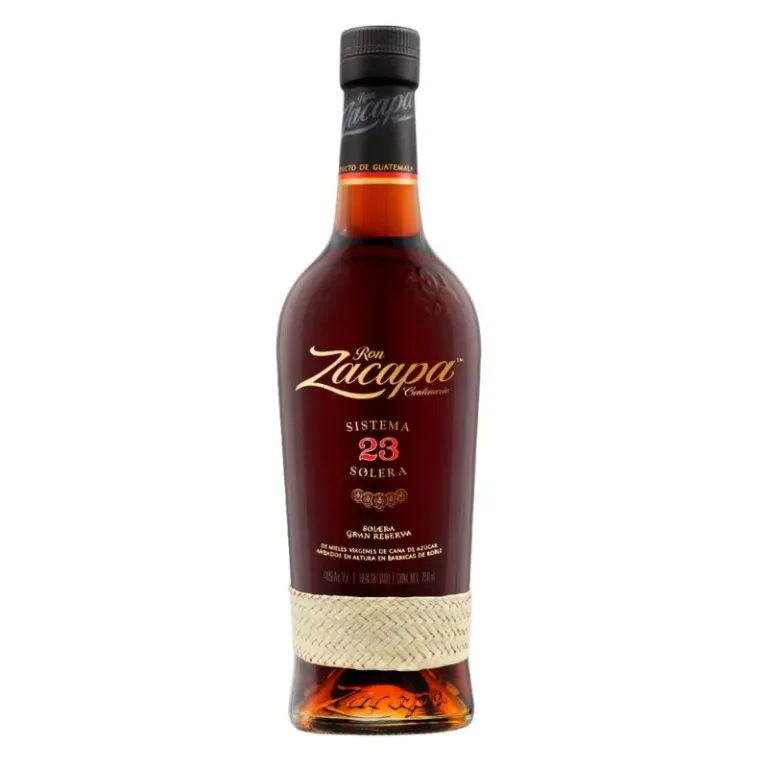
Color: A beautiful deep amber, which is partially the result of time in the barrel and partially due to the use of caramel coloring to produce a more consistent and appealing hue
Nose: The sherry cask influence comes through right away with aromas of raisin, hazelnut, and chocolate. Oak and caramel also make their presence felt.
Palate: Dark fruits, caramel, molasses, and slightly bitter coffee accompanied by a light sherried tang, with lingering notes of oak and char. While it’s not overly sweet, the mouthfeel is heavy, almost syrupy, thanks in part to the sugar added after distillation.
Finish: Cacao and gentle oak linger on the back of the palate, while a fuzzy, need-a-toothbrush feeling lingers on the teeth.
Our Review
During the first Obama administration, Zacapa was the toast of the rum world. Bartenders swore by it, rum bloggers raved about it, industry competitions gave it plenty of awards, and thanks to a distribution deal with spirits giant Diageo, it was one of the highest-profile brands in the premium rum category. But no spirits sector changed more dramatically in the 2010s than rum.
Distillers and bloggers started shining a light on how big-name distilleries made their rums, and it turned out that many of them, including Zacapa, added sugar, artificial coloring, and various other additives to the product after distillation. This practice isn’t illegal, and it’s widespread, especially among Latin American distilleries (Zacapa is made in Guatemala). But lots of longtime rum drinkers felt deceived, and started gravitating toward unadulterated rums like Foursquare and Appleton. Consumers also realized that the “23” on the bottle didn’t exactly refer to the age of the rum inside. Again, while not technically illegal, this consumer deception gave rum fans less reason to trust the brand. Sales haven’t suffered since, but Zacapa’s reputation certainly has.